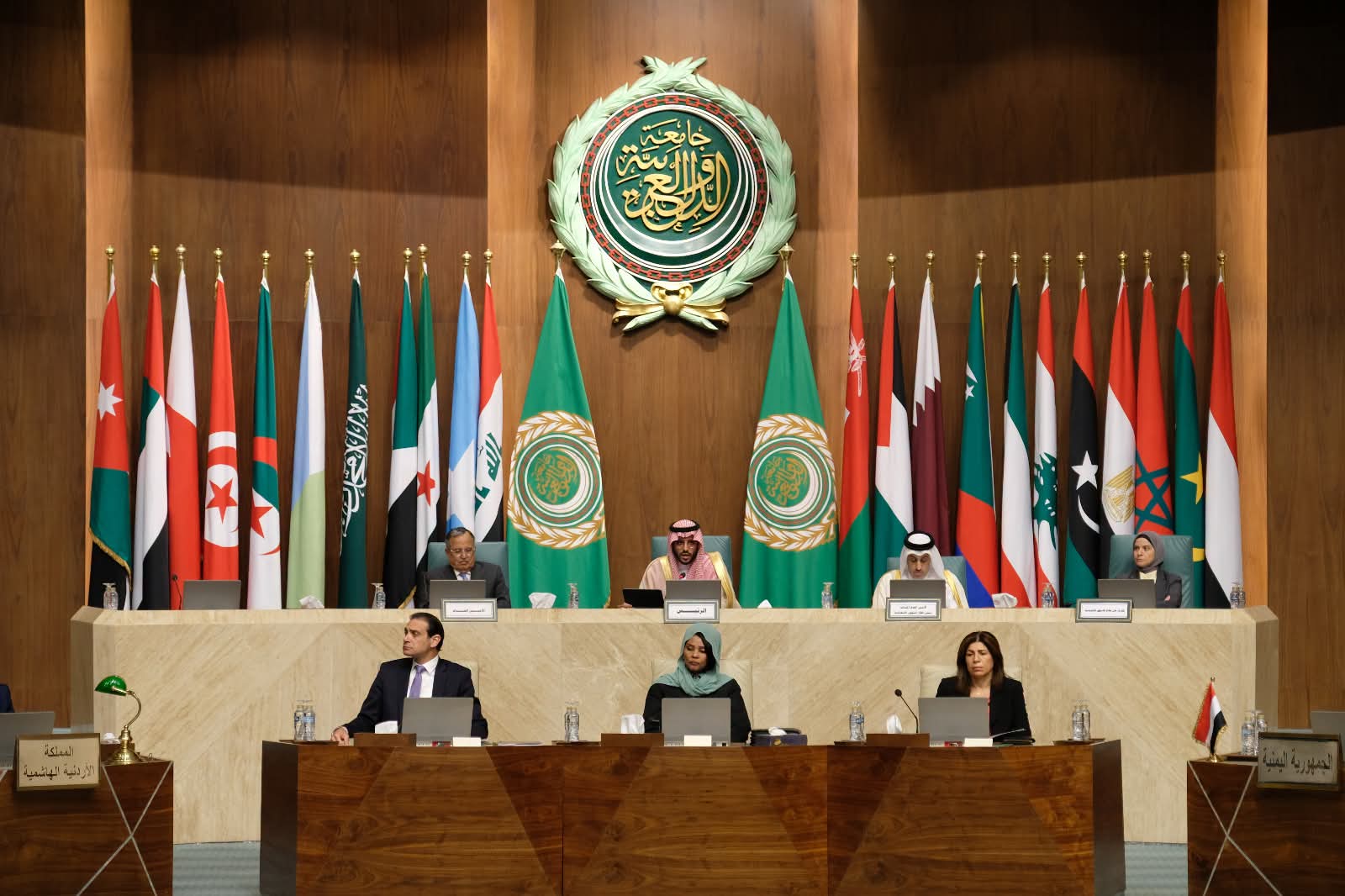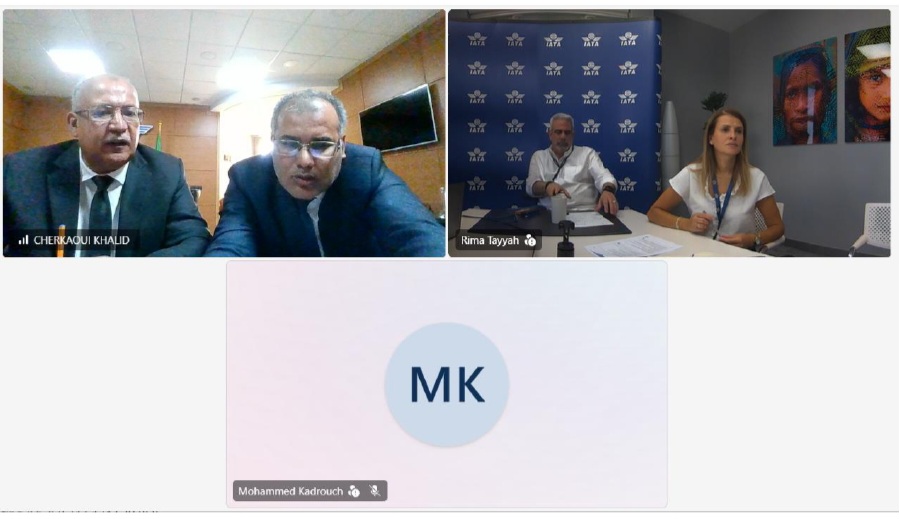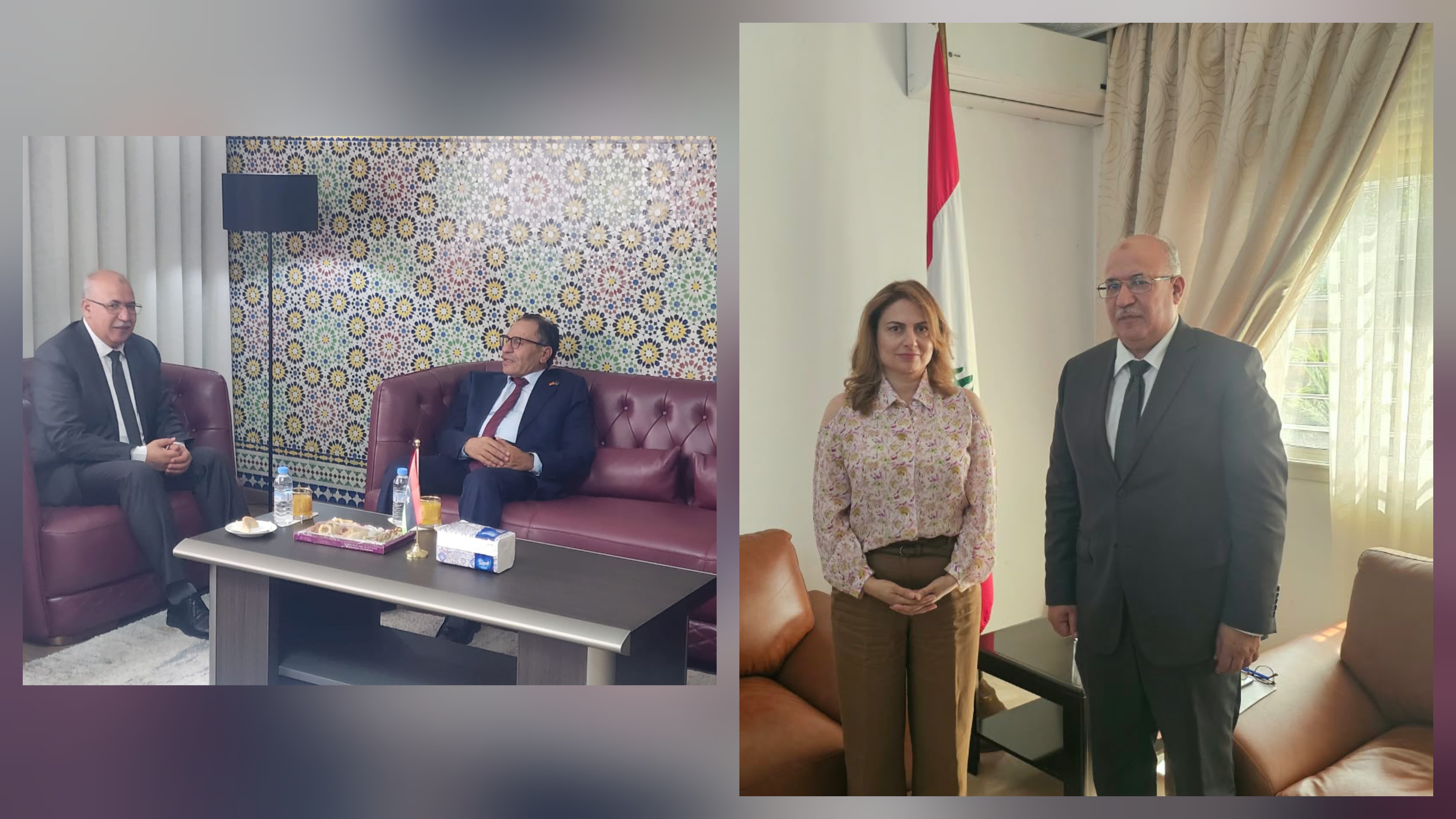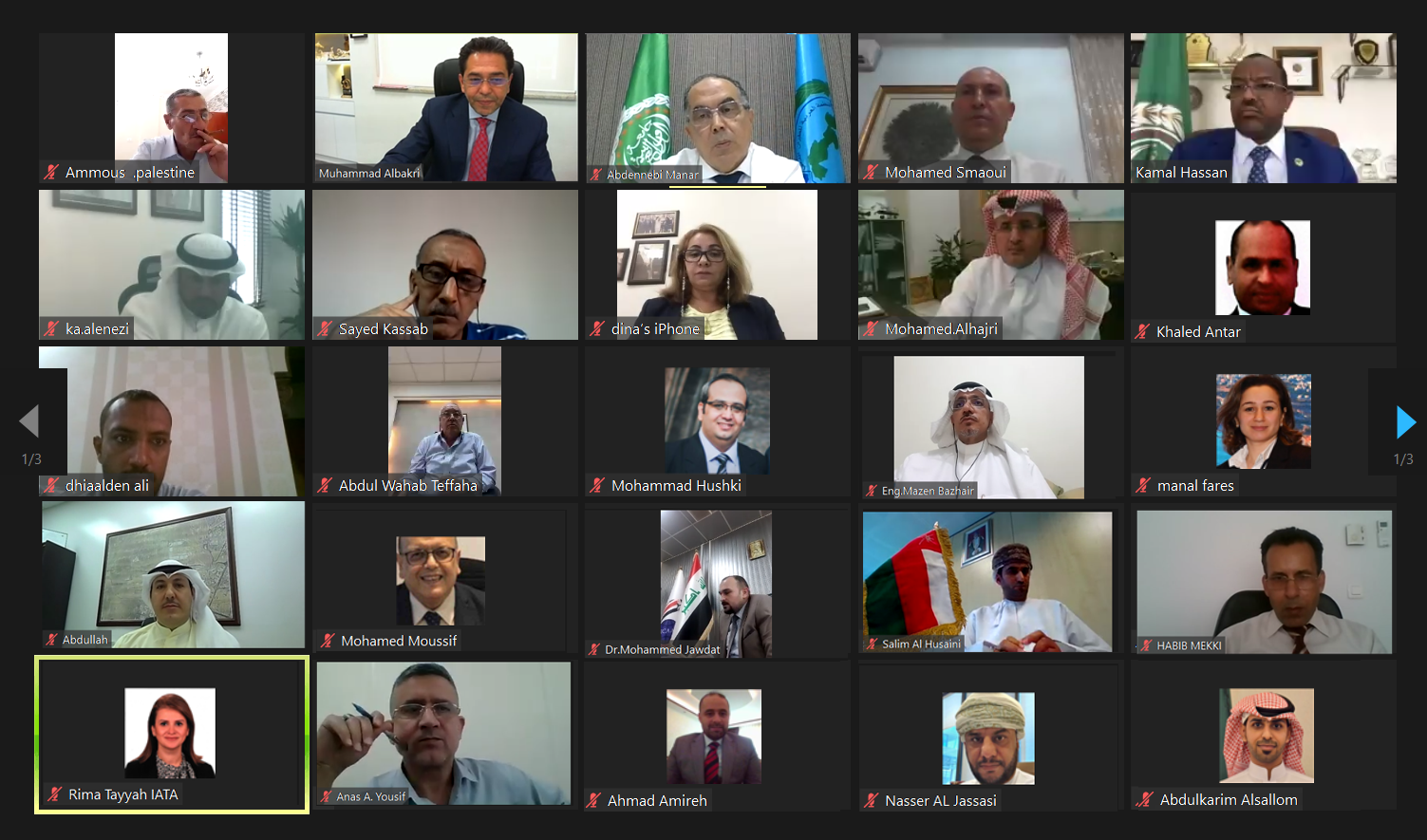
Rabat - On July 27, 2020, the Arab Civil Aviation Organization held a workshop entitled: "Restoring the confidence of the air traveler and stimulating travel demand", using distance communication technology. The workshop which aims to determine the extent of the impact of the Corona virus crisis on the aviation sector, and reduce public health risks in light of the outbreak of the new Coronavirus (COVID 19) pandemic, and in particular risks related to air passengers and workers health. It also aims at enhancing the confidence of travelers in order to initiate the recovery of civil aviation activity, by studying mitigation measures and precautionary measures included in the guidelines prepared by the International Civil Aviation Organization´s Council aviation recovery task force (ICAO), as well as the "Civil Aviation Recovery Global Implementation Roadmap" framed by the ICAO Secretariat, which constitutes a high-level implementation framework.
Eighty seven officials from 13 civil aviation authorities of member States participated in the workshop representing the Hashemite Kingdom of Jordan, the Kingdom of Bahrain, the Republic of Tunisia, the People´s Democratic Republic of Algeria, the Kingdom of Saudi Arabia, the Republic of Iraq, the Sultanate of Oman, the State of Palestine, the State of Qatar, the State of Kuwait, the Republic of Arab Egypt, the Kingdom of Morocco and the Republic of Yemen, in addition to the participation of: the economic sector of the General Secretariat of the League of Arab States, the Arab Air Carriers Organization, the ICAO Middle East Office, the IATA Office for Africa and the Middle East, as well as representatives of Arab airlines under the umbrella of AACO.
Organizing this event comes within the various activities that the Arab Civil Aviation Organization carries out on a number of issues relevant to her mandate, and mainly, strengthening cooperation and coordination between Arab countries in the field of civil aviation and developing it, while laying the foundations for its unification, in order to respond to the needs for a safe, secure and regular air transport throughout the Arab nation. This comes in line with the Air Transport Committee recommendation No. 43, which was held on May 19-20, 2020, stipulating in its third paragraph to : "Commission the General Directorate to quickly organize a workshop in coordination with the Arab Civil Aviation Organization, member States´ Civil aviation authorities , the International Civil Aviation Organization, the International Air Transport Association and the Arab Air Carriers Organization, to discuss the indicators that contribute in restoring air transport operations and launching the recovery of the industry, as well as restoring the traveler´s confidence for the coming period, in a manner that ensures airlines continuity as well as all components of the industry, and restart at the same levels prior to the pandemic, and better, God willing.
The Arab Civil Aviation Organization has also made a conscious effort to contribute with the rest of the Arab institutions in providing an Arab platform to allow discussion on most important related topics.
His Excellency Eng. Abdenbi Manar, Director General of the Arab Civil Aviation Organization, opened the workshop where he welcomed His Excellency Ambassador - Dr. Kamal Hassan Ali - Assistant Secretary General, Head of the Economic Sector of the League of Arab States, and also with the participation of their Excellences, heads and directors of civil aviation authorities and authorities of the Arab countries members of the organization.
His Excellency expressed his full thanks and appreciation for their continuous support to the organization and their vigilance in facilitation integration and coordination bringing together the organization´s general management and their honorable authorities and bodies. He also thanked the partners for organizing this interactive meeting, especially:
- His Excellency Mr. Abdel Wahab Tuffaha, Secretary General of the Arab Air Carriers Organization.
- His Excellency Eng. Mohamed El-Samawy, Acting Regional Director, ICAO Middle East Office.
- His Excellency Mr. Muhammad Ali bin Muhammad Ala Al-Din Al-Bakri, IATA Vice President for Africa and the Middle East.
It should be noted that this workshop was divided into four sessions. The first session defined the opening words, and the second session was dedicated to the impact of the pandemic on the aviation sector, consistent with the presentation made by the Arab Air Carriers Organization. As for the third session, the list of indicative health measures published by the International Civil Aviation Council Air Transport Restart Task Force was addressed through three presentations : the first presentation was presented by the Arab Civil Aviation Organization on the general framework of the regulation, the second presentation was presented by the Regional Office of the International Civil Aviation Organization in Cairo and covered the topic related to The passenger journey based on CARTS work, and the third one was presented by the International Air Transport Association for Africa and the Middle East. The fourth session, which was devoted to the package measures submitted by countries to support the restart of air transport and its recovery from the effects of the pandemic through member states of the Organization presentations reviewing their experience and measures implemented in that respect, followed then by a session of questions and discussions.
For his part, His Excellency Dr. Ambassador - Kamal Hassan Ali - Assistant Secretary General, Head of the Economic Sector at the League of Arab States, started his speech by welcoming the participants to this workshop, stressing the important and required role of joint Arab action institutions at this stage while the Arab region is witnessing changes and developments. He also thanked the General Directorate of the Arab Civil Aviation Organization for the opportunity to participate in this interactive meeting in order to consult on the negative effects of the new Corona virus pandemic and the restriction imposed on air traveler´s movements and ways to provide solutions for its recovery. The impact of the spread of this epidemic has forced most countries around the world to impose a state of emergency and impose total or partial closures on passenger traffic. This contrived major Arab airlines to suspend or reduce their flights, and thus led to a sharp decline in the sector´s revenues, resulting in negative repercussions that led to reducing the salaries of workers and dispensing others, because of the inability of these airlines to maintain the necessary financial liquidity during the prolonged interruption of operation. He indicated that initial estimates point out that 60% of travelers strive to return back to travel after one to two months post containment of the Corona virus, appraising the package of appropriate and risk-based measures and procedures that have been approved by the Council of the International Civil Aviation Organization, to restart international air transport in light of the procedures and measures recommended by the World Health Organization. He also mentioned that travelers´ confidence would suffer from the impact of two main factors even after the global epidemic is contained, the first one being personal economic concerns in the face of the looming recession, and the second one concerns relates to travel safety in the long term. This implies that governments must accelerate the development of standards to enhance air travelers´ confidence in health safety measures, by establishing a proactive system for the detection and control of potential patients, while avoiding to turn travelers experience into a devastating one, with the need to invest in health emergency tools to detect, respond and recover. Accordingly, restoring air traveler´s confidence derives from the efficiency in implementing precautionary measures, in addition to the impact of the offers made by agents and partners involved in the travel sector as a kind of incentives to the traveler calling for more innovative methods on how to restore the traveler´s confidence in the travel sector.
His Excellency Dr. Ambassador - Kamal Hassan Ali also noted the reports issued by the General Directorate of the organization as forwarded to the Arab League, provided analyzes and estimates on the negative effects that hit the sector as a key industry of the Arab and global economy. He also hoped that the workshop would come up with important recommendations that will be presented during the next meeting of the Council of Arab Transport Ministers and are included in the overall vision for joint economic action after the Corona pandemic, which will be submitted to the Economic and Social Council.
During his intervention, His Excellency Mr. Abdel Wahab Tuffaha, Secretary General of the Arab Air Carriers Organization, spoke about the four elements, which he believes are necessary to share with those involved in decision-making in the civil aviation and air transport sector in the Arab countries, and they are:
ü The first element: health outweighs the economy in terms of importance. Consequently, airlines understand that countries are trying to enhance their health status even if it is at the expense of the economy and economic openness. Nonetheless, in the backdrop of the crisis for at least one more year, consideration should be given to elements that enhance air transport immunity, and this is mainly due to the lack of consumer confidence and the lack of confidence of governments to open up, until there is a vaccine against this virus.
ü The second element is that 95% of the new Corona virus infections show among residents and not among expatriates and this percentage in the United States of America rises to 99%, and accordingly, the fear of expatriates is not as severe as measures applied by governments currently on them.
ü The third element: implementing isolation measures upon arrival, or narrowly limiting the countries to travel to and from, affects the restoration of air traveler´s confidence, especially if we look at the previous data and see that only 5% can transmit the infection, in addition to the measures that have been addressed through the CART document, as well as PCR analysis before and sometimes after travel, and preventive measures at airports and on airplanes, all these measures immunize the air transport sector against the spread of the epidemic.
ü The fourth element: exaggerated sterilization procedures for aircraft at return points, will not achieve anything given that all aircraft are sterilized at least once every 24 hours in addition to the precautionary measures at airports and airplanes. On the contrary, it will create a financial burden for air carriers causing departure times delays and resulting in a congestion of passengers in the departure halls.
In the speech His Excellency Engineer Mohamed Al-Samawi, acting Regional Director, ICAO Middle East Office, he started by thanking the Arab Civil Aviation Organization for the invitation to participate in this important event, which sheds light on one of the most important current challenges of the civil aviation sector, requiring concerted efforts to reduce health risks at all stages of travel and more importantly restoring the public´s confidence in flying. His Excellency also indicated that the safety and well-being of passengers and aviation sector´s employees is a top priority for the International Civil Aviation Organization. Consequently, the organization has undertaken many regional and international initiatives to help countries resume operation and recover from the impact of the Coronavirus pandemic, through wide-ranging consultations with countries and organizations, with important contributions from the World Health Organization and with the participation of a number of other United Nations organizations such as the International Organization for Migration and others, and many partners and stakeholders in the aviation sector. His Excellency also addressed the report of the Civil Aviation Recovery Task Force, which aims to relaunch the international air transport sector and harmonize global activities aimed at achieving this purpose, highlighting that following the guidance included either in the report or in the take-off document will facilitate the process of mutual recognition and harmonization of procedures related to the emerging coronavirus in the aviation sector worldwide in line with ICAO standards, plans and policies.
In his closing remarks Engineer Muhammad Al-Samawi stressed that, in order to overcome this pandemic successfully, everyone must cooperate closely and continuously, and that planning for the future should be done by following a flexible approach and ensuring strict and coordinated follow-up, while assessing the situation and benefiting from lessons at this stage to build a flexible and resilient aviation system with future crises, and to restore the confidence of the air traveler and stimulate the demand for safe travel. He also stated that the International Civil Aviation Organization continues to work on the concept of a public health corridor, which uses a risk-based approach to mitigate the spread of Covid 19 disease. It is worth noting in this respect the importance of public health measures to restart the air transport industry while calling for more innovative ways on how to restore public confidence in flying.
In his address, His Excellency Mr. Muhammad Ali bin Muhammad Ala Al-Din Al-Bakri, IATA Vice President for Africa and the Middle East, started by thanking the Arab Civil Aviation Organization for the constant coordination and cooperation efforts with the various international and regional organizations, deemed to be the pillars and cornerstones of the air transport restart and recovery from the effects of the Coronavirus pandemic; three vital topics were highlighted by his Excellency in his speech, namely:
- The International Air Transport Association wishes that States and governments of the region to expedite the implementation of the take-off plan, and for mutual recognition between them as stated in the plan.
- The second topic relates to the Corona virus tests; given that a health test reduces the risks of the virus spreading, but if these checks do not follow the standards of speed, efficiency and reliability, it will result in them that will negatively affect the recovery rates of air travel demand. The cost factor of these Medical tests is also one of the obstacles that the sector faces during the recovery phase, and it will negatively affect the cost of travel, thus slowing the people´s demand for travel.
- The International Air Transport Association called on governments of the region to provide financial support for this sector, as airlines in the region suffer greatly from the repercussions of the spread of the Corona virus, as they incurred important financial losses due to the lack of air passenger traffic and the diminution of financial flows from revenues. It is expected that airlines in the region will lose the equivalent of $ 37 per passenger during the year 2020, compared to the previous year´s loss, which was estimated at $ 6.
The workshop continued with a presentation from the Arab Air Carriers Organization during the second session. It was devoted to the impact of the pandemic on the aviation sector. The third session discussed the indicative list of health measures published by the ICAO´s Council Air Transport Restart Task Force, according to the presentation of the Arab Civil Aviation Organization, on the general framework of the regulation, the Regional Office of the International Civil Aviation Organization in Cairo regarding the CART´s passenger journey, The International Air Transport Association for Africa and the Middle East, followed by the fourth session, which was devoted to the measures submitted by countries to support and relaunch of air transport and its recovery from the effects of the pandemic (the Hashemite Kingdom of Jordan, the Republic of Tunisia, the People´s Democratic Republic of Algeria, the Kingdom of Saudi Arabia, the Republic of Iraq, the Sultanate of Oman, the State of Qatar, the State of Kuwait, the Arab Republic of Egypt and the Republic of Yemen.) based on their experience and the measures implemented by them in this regard.
At the end of the workshop, it was recommended that:
- Governments should follow standard guidance issued by the ICAO Council Aviation Recovery Team on health measures that countries may adopt when relaunching air transport.
- The health measures adopted by governments be supported by scientific evidence and based on risk assessment, and within this framework, three important points must be emphasized:
- The importance of avoiding quarantine in the country of arrival, as it is an ineffective measure to protect against the virus and does not guarantee that the infection will not spread at the airport of arrival or the country of destination, according to what was stated in the IATA presentation. The effect of quarantine on travel demand is very negative and resembles the effect of a complete ban Travel.
- Not applying physical spacing on board the aircraft as a condition of operation. It is necessary to avoid such a procedure in the presence of high-efficiency air filters (HEPA FILTERS) and because of the movement of air circulation inside the cabin. Airlines can apply physical spacing if the number of passengers, cabin division, weight factors and plane balance allow this.
- Aircraft sterilization procedures are based on the risk of transmission so that countries do not exaggerate the requirements for sterilizing aircraft, since freezing the aircraft on the ground will not help the return of demand for travel and will lead to major delays in flights and schedules and congestion of travelers in airport lobbies, especially as airlines are committed to a set of measures to limit movements on board.
In addition, the participants of the workshop agreed on the importance of the following points in re-stimulating travel demand:
- Facilitating travel visas
- Enabling full travel insurance that covers COVID19
- And as a final point, underlined the importance to start preventing the virus in the planning stage of travel, as stated in the countries´ presentations, and the use of technology on the largest scale which helps in this as well as in reducing the touch points in surfaces during the entire stages of travel.